- Home
- Carpal tunnel causes
- Carpal Tunnel Syndrome and Wrist Fractures
Carpal tunnel syndrome and wrist fractures
Carpal tunnel syndrome and wrist fractures ( PART 1 )
Carpal tunnel syndrome can result from wrist fractures and wrist dislocations. Sometimes these are referred to overall as "WRIST INJURIES" or "TRAUMATIC WRIST INJURIES". (i.e. slip and falls or carpal tunnel from auto accidents)
You may find it interesting to learn that Sir James Paget first reported median nerve compression (what we now call carpal tunnel syndrome) at the wrist following a wrist fracture...back in 1854!

Carpal tunnel syndrome and wrist fractures ( PART 2 ).
Wrist fracture is a general term. There are several different kinds of wrist fractures. The most common is the COLLE's FRACTURE (pronounced CALL-lees).
It usually results from a slip and fall onto an outstretched arm and hand. Ironically, the carpal (wrist bones) are not broken, rather it's one of your bones in your forearm!
The end of the radius bone (pronounced Ray-dee-us). It's the bone that's on the same side as your thumb, and it breaks about an inch from your wrist joint.
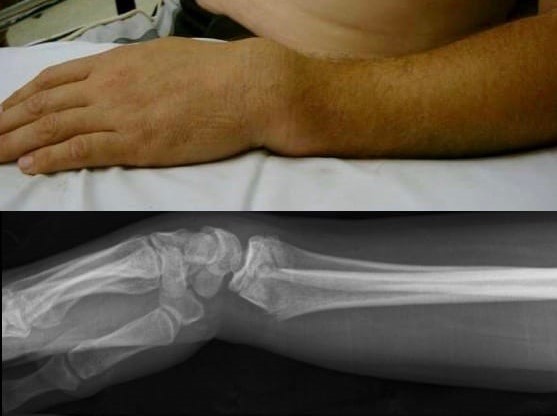
"Traumatic wrist injuries" can result in what's called "Acute carpal tunnel syndrome". As explained in carpal tunnel anatomy the wrist has a tunnel in where the carpal bones are on three sides and the TRANSVERSE LIGAMENT is on the other side-resulting in a closed space or tunnel.
If this tunnel area is made even smaller via trauma, it can squeeze or put pressure on the [median nerve] that runs through it giving you carpal tunnel symptoms.
Carpal tunnel syndrome and wrist fractures ( PART 3 )
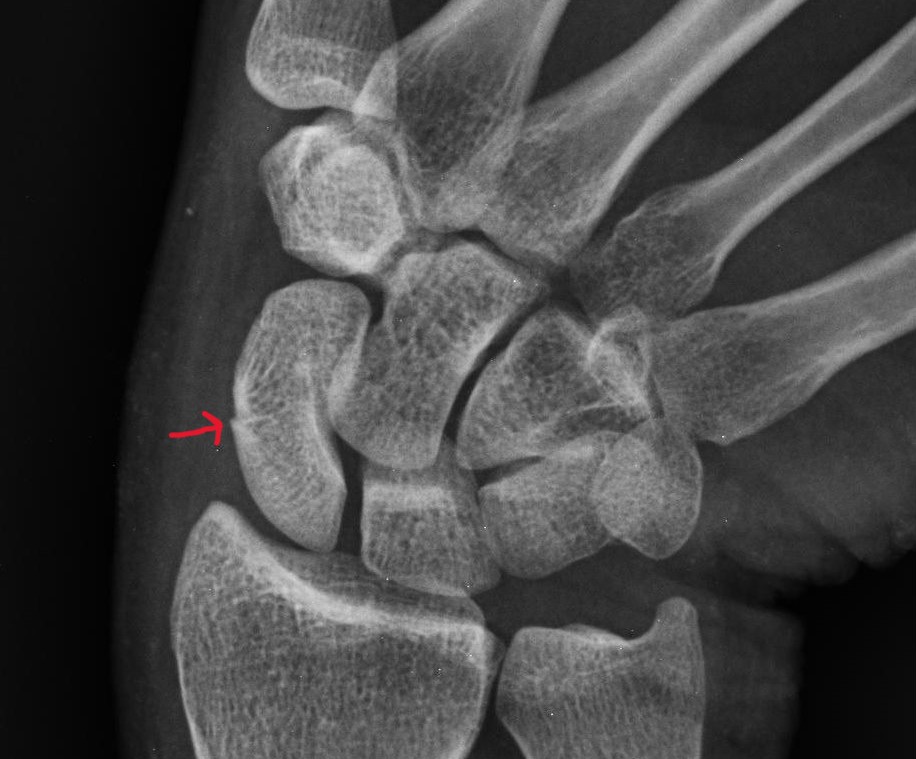
You can also have fractures of the actual wrist bones and the name comes from whatever bone is fractured. The most common is the SCAPHOID (Scaff-Foyd) also known as NAVICULAR (Nuh-vick-u-ler) fracture.
This bone is located around the base of your thumb, where it meets that side of your wrist. A test your doctor will do to see if it's broken is they will push on this area; If it's painful, that is called a positive "snuff box test" and you must get an xray or MRI to see if you have indeed fractured this very important wrist bone.
Carpal tunnel syndrome and wrist fractures ( PART 4 )
Another type of wrist injury, is a WRIST DISLOCATION. Dislocation means a severe displacement of the bones in a joint. So there is NO BREAK or fracture (in a true dislocation) but the bones are NOT where they're suppose to be.
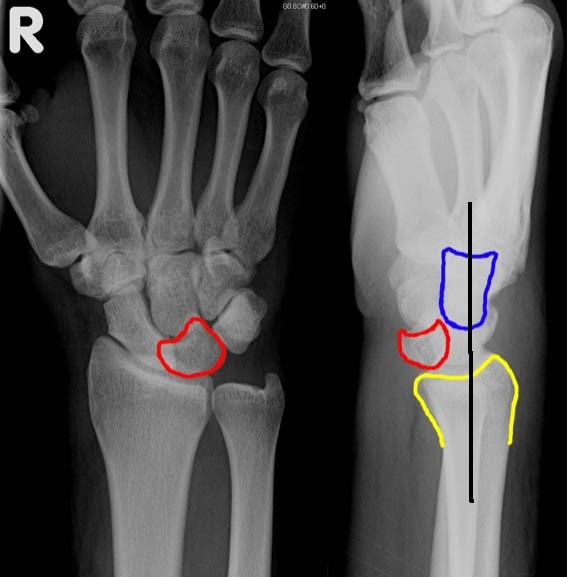
As you may know from reviewing CARPAL TUNNEL CAUSES and ANATOMY OF CARPAL TUNNEL , IF the bones or swelling or ANYTHING dissrupts the carpal tunnel and makes it smaller, it will most likely put more pressure on the tendons and [MEDIAN NERVE] as they pass through the tunnel, which can give you carpal tunnel symptoms.
This is why sometimes it's referred to as "ACUTE CARPAL TUNNEL" because it's from a traumatic or quick type of injury, instead of the "regular" type of carpal tunnel syndrome which can take months even years to develop.
Carpal tunnel syndrome and wrist fractures should always be thought of as a possibility anytime you have a traumatic wrist injury such as an auto accident, or a slip and fall and you start to have carpal tunnel symptoms.
IF you suspect you have a wrist fracture, hold the wrist still, if you have a WRIST SPLINT you can carefully put that on your wrist as well as put ice on it, and head to the hospital or clinic for an xray.
In my opinion all wrist fractures should be at least evaluated if not treated and followed by an orthopedist.
Carpal tunnel syndrome explanation
Carpal tunnel syndrome causes
Medicines for carpal tunnel relief
CTS wrist braces
- Home
- Carpal tunnel causes
- Carpal Tunnel Syndrome and Wrist Fractures
Share this page:
Recent Articles


-
The carpal tunnel store
The carpal tunnel store has a huge selection of Medical Grade Products -
Anatomy of the carpal tunnel
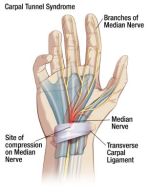 The carpal tunnel anatomy is easy to understand if you remember we're dealing with a tunnel of sorts in your wrist. Learn the anatomy from a medical practitioner.
 -
Carpal tunnel prevention program
A carpal tunnel prevention program at the workplace may help employees from getting symptoms. Learn the best carpal tunnel prevention program on the web today.
Recent Articles
-
The carpal tunnel store
The carpal tunnel store has a huge selection of Medical Grade Products -
Anatomy of the carpal tunnel
The carpal tunnel anatomy is easy to understand if you remember we're dealing with a tunnel of sorts in your wrist. Learn the anatomy from a medical practitioner. -
Carpal tunnel prevention program
A carpal tunnel prevention program at the workplace may help employees from getting symptoms. Learn the best carpal tunnel prevention program on the web today.