- Home
- Diagnosing CTS
- Latest Diagnostic Criteria for Carpal Tunnel
Latest diagnostic criteria
for carpal tunnel
The latest diagnostic criteria for carpal tunnel comes from the recommendations of the National Institute of Occupational Safety and Health (NIOSH) for work-related carpal tunnel syndrome.
In diagnosing carpal tunnel syndrome, it should include two or more of the following criteria:
(ONE or MORE SYMPTOMS and ONE or MORE OBJECTIVE findings.)
One or more of the FOLLOWING SYMPTOMS affecting at least part of the median nerve distribution of the hand:
- Paresthesias-(pronounced Pair-ruh-steezes-yuh) which is Numbness and Tingling of the fingers
- AND/OR Hypesthesias-(pronounced Hi-puh-steezes-yuh) a Reduction in the sense of touch of the finger or thumb pads, and surface of the palm.
One or more of the FOLLOWING OBJECTIVE findings:
- Physical Findings of median nerve compression including a positive Tinel's sign or a positive Phalen's test
- AND/OR Decreased or absent sensation to pin prick in the median nerve distribution.
- AND/OR Electrodiagnostic findings (i.e. NERVE CONDUCTION TEST (NCS), and/or an EMG TEST for carpal tunnel syndrome). Also REVIEW: ABNORMAL NERVE CONDUCTION TEST
So in other words, you need at least one from the SYMPTOMS group, and at least one from the OBJECTIVE FINDINGS group in order to fall under this diagnostic criteria for carpal tunnel syndrome.
Although the latest diagnostic criteria for carpal tunnel was developed to better help define and track carpal tunnel syndrome from a governmental labor standpoint, the criteria is appropriate and helpful for clinical practice as well, whether work-related or not.
Carpal tunnel Store
Homepage
Carpal tunnel syndrome causes
CTS Explanation
CTS causes and controversy
Lab tests and Xrays for carpal tunnel syndrome
- Home
- Diagnosing CTS
- Latest Diagnostic Criteria for Carpal Tunnel
Share this page:
Recent Articles


-
The carpal tunnel store
The carpal tunnel store has a huge selection of Medical Grade Products -
Anatomy of the carpal tunnel
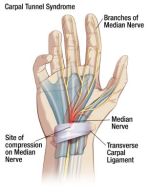 The carpal tunnel anatomy is easy to understand if you remember we're dealing with a tunnel of sorts in your wrist. Learn the anatomy from a medical practitioner.
 -
Carpal tunnel prevention program
A carpal tunnel prevention program at the workplace may help employees from getting symptoms. Learn the best carpal tunnel prevention program on the web today.
Recent Articles
-
The carpal tunnel store
The carpal tunnel store has a huge selection of Medical Grade Products -
Anatomy of the carpal tunnel
The carpal tunnel anatomy is easy to understand if you remember we're dealing with a tunnel of sorts in your wrist. Learn the anatomy from a medical practitioner. -
Carpal tunnel prevention program
A carpal tunnel prevention program at the workplace may help employees from getting symptoms. Learn the best carpal tunnel prevention program on the web today.